


They struggle with the version of themselves they’re trying to protect.
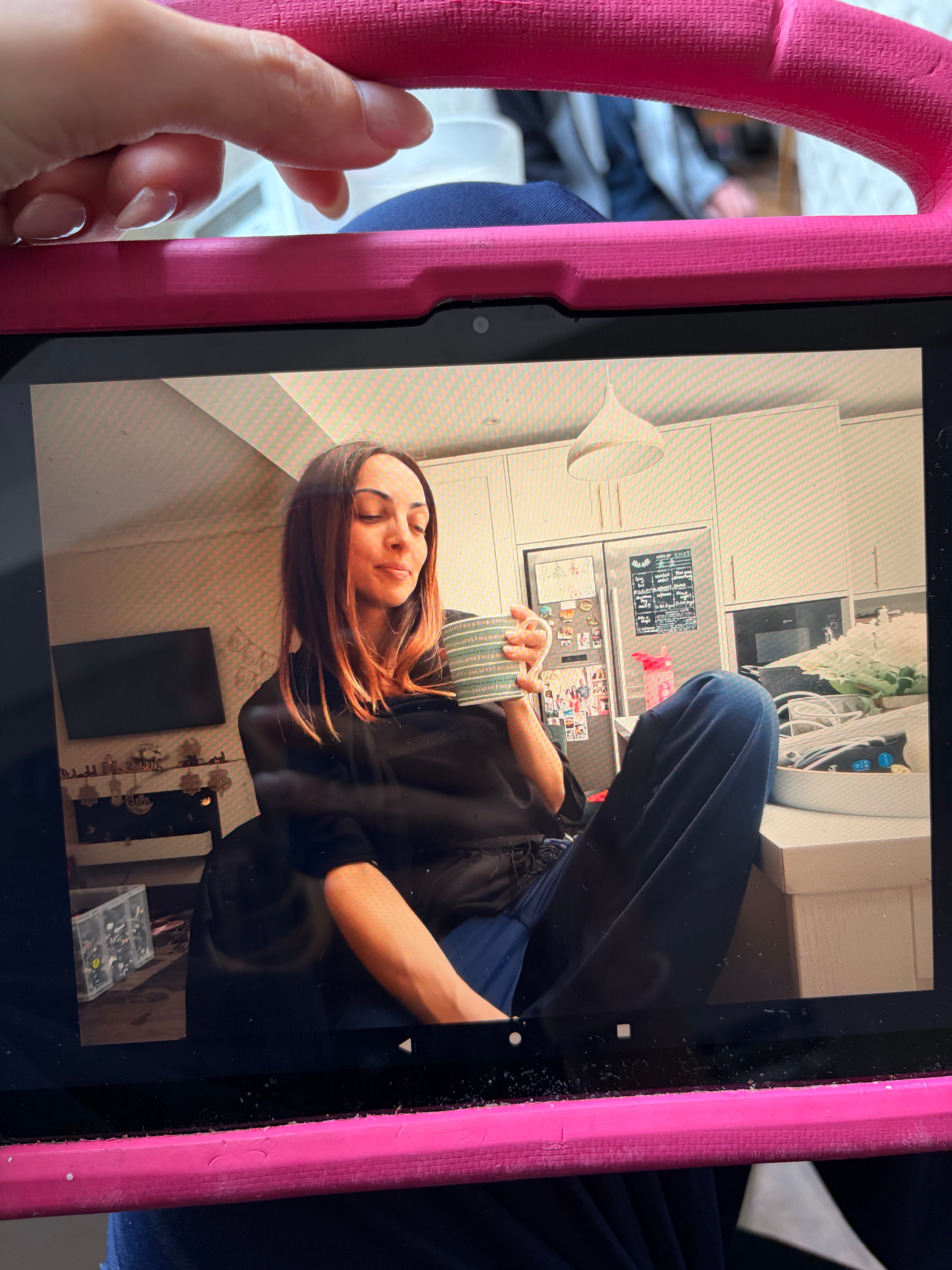
{Taken by a 7 year old. Good shot right?}
I came across something Tony Robbins said recently, and it stayed with me far longer than I expected. He talks about the six human needs that drive everything we do (certainty, variety, significance, love, growth, contribution), and how every decision we make is, in some way, an attempt to meet them.
It sounds abstract until you start noticing where it shows up in real life.
For example, in front of your wardrobe.
There’s a very particular moment most women recognise immediately, you’re standing there, nothing is technically wrong, you have options, you’ve worn these clothes before, and yet something doesn’t land. You hesitate, you change once, twice, maybe three times, and eventually you reach for the outfit that has never betrayed you. The one that moves you through the day without questions, without attention, without friction.
You call it being practical. But what you’ve actually chosen is certainty.
And it happens in seconds. Quietly. Without you even noticing you’ve just made a decision about how visible you’re allowed to be that day.
A few days later, often without planning to, you see someone who carries herself differently. Not louder, not more dressed up, just more decided. And there’s a quiet recognition that has very little to do with her and everything to do with you, the version of you that feels just slightly out of reach.
So you try again. You put something on that feels closer to that version, and almost immediately you begin adjusting it. You soften it, you edit it down, you bring it back into a range that feels acceptable. Because as much as you want to be seen, you also want to belong, and that tension is where most wardrobes quietly fall apart.
This is where the conversation usually goes wrong.
We’ve been taught to diagnose this as a style issue, or a lack of discipline, or a need to shop better, when in reality it’s much closer to a misalignment of needs. You are trying to feel safe, and seen, and connected, and evolving, all at once, using clothes that were never chosen with those intentions in mind.
So one outfit leans too heavily into certainty and disappears. Another leans too heavily into significance and feels performative. Another chases variety and ends up disconnected from your actual life. And somewhere in between, you start to believe the problem is you.
What Robbins articulates, and what I see every day in my work, is that people don’t lack motivation. They lack awareness of what is driving their behaviour. Once you see it, everything becomes cleaner.
The woman who wears black every day is not boring; she is protecting her need for certainty (and probably saving herself ten decisions before 9am). The woman who keeps buying new pieces is not inconsistent; she is chasing variety without structure. The woman who saves her best outfits is not disorganised; she is negotiating her sense of significance. The woman who tones herself down is not lacking confidence; she is prioritising connection over visibility.
When those needs are met unconsciously, your wardrobe becomes a collection of compromises. When they are met deliberately, it becomes a system. That is the difference.
This is why I don’t start with trends or aesthetics, or even finding your style in the way it’s usually framed. I start with understanding what your life actually demands of you, and how you need to feel within it, because only then can you build something that holds you properly. A wardrobe that gives you certainty without shrinking you, variety without chaos, significance without performance, connection without self-abandonment, growth without confusion, and contribution without exhaustion.
Getting dressed was never just about clothes. It has always been about the quiet decisions you make about who you are allowed to be, and under what conditions. When those decisions are made on purpose, everything else becomes simpler in a way that feels almost surprising.
Looking good is easy. Feeling aligned is where things finally start to change.
If you’re in that space where your wardrobe technically works, but something still feels off, it’s usually not about buying more.
But understanding what’s driving your decisions.
And if you’re curious to explore that properly, you can always reach out or start the conversation.
This is the part I spend most of my time in.