


If you understand balance
There’s a moment every year when I realise spring has arrived, and it’s never on the official date.
It usually happens in a very ordinary way.
Maybe I’m walking somewhere I’ve walked a hundred times before and suddenly notice that the trees are a brighter green than they were last week. Or I step outside in the morning wearing the coat I’ve been wearing all winter and realise halfway down the street that it suddenly feels… like too much.
Spring wardrobes always create a very particular type of confusion.
Every year it’s the same ritual.
Someone posts a photo wearing a beautiful coat, or the perfect linen set, or a pair of trousers that somehow makes them look like they live in a quiet Italian town where everyone owns a bicycle and drinks espresso slowly.
And immediately the comments begin.
Where is it from?
I need that.
Send the link.
Which is understandable.
We see something beautiful and our brain immediately assumes the solution is acquisition.
Buy!
Problem solved.
Except… it rarely is.
Because what people forget is that wardrobes are not Pinterest boards.
They are ecosystems.
And ecosystems only work when the elements belong to the same environment.
What works beautifully for one woman can be completely useless for another, because her life is different. Her mornings don’t look the same, her job asks for something else, her body moves differently, even the weather she wakes up to changes everything. And yet we keep dressing as if all of those things didn’t matter.
Even different tolerance for discomfort, which is a very real category in my professional opinion.
Some women will happily wear structured trousers all day.
Others will slowly lose their will to live by 2pm.
And this is why copying wardrobes almost always fails.
Not because you don’t have taste.
But because the architecture behind the outfit is different.
So when spring arrives and everyone suddenly feels the urge to refresh everything, which is a completely natural instinct by the way, I always suggest starting somewhere very boring.
Not shopping.
Observation.
Specifically three things.
(You might spot a few repeated looks, before you think I’ve run out of ideas, it’s intentional. The best outfits are never following just one rule, they’re layering a few at once… which is exactly why they look so good.)
1. Light and Dark (the easiest styling trick in the world)
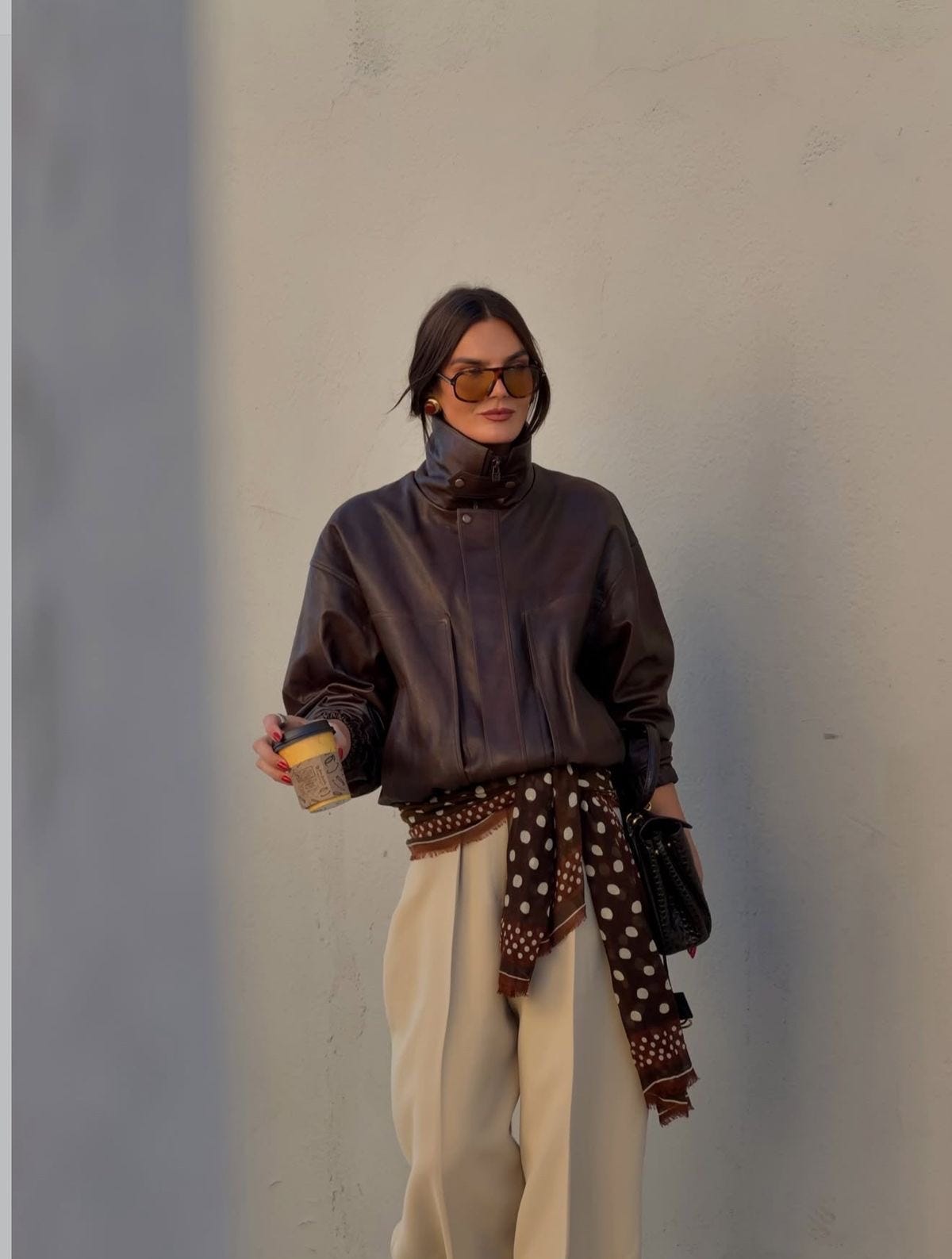
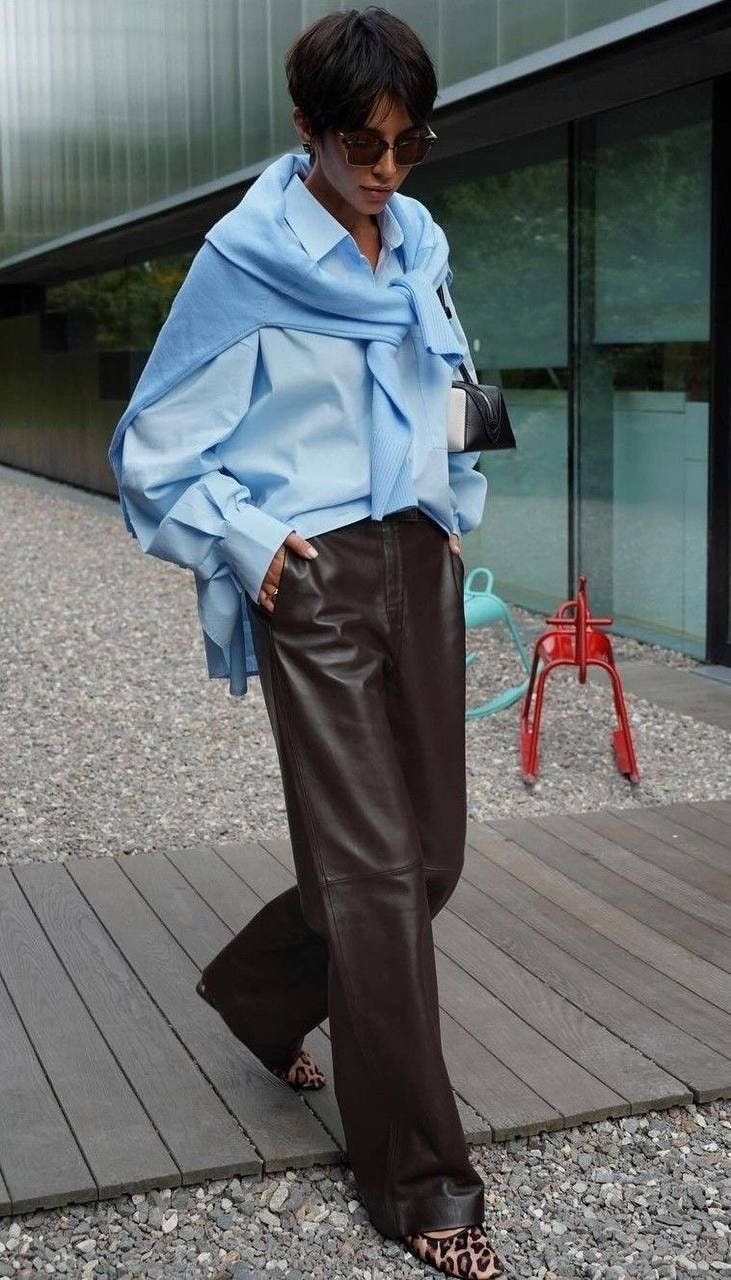
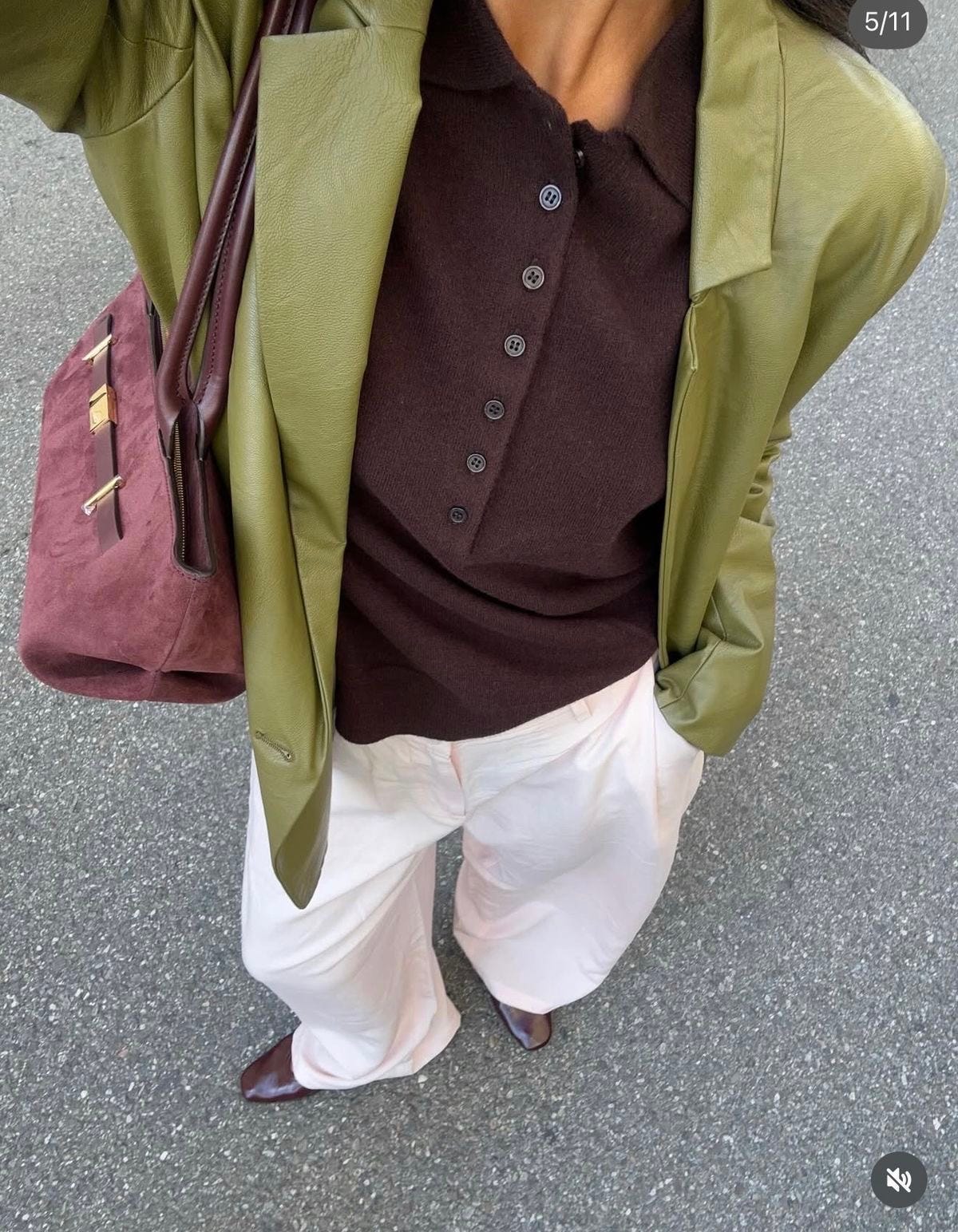
If your top is light, make the bottom darker.
If the bottom is light, anchor it with something darker above.
This is one of those principles that stylists learn very early because the human eye loves contrast.
Without contrast the body disappears slightly inside the clothing.
With contrast the silhouette suddenly looks structured.
Think about the classic white shirt and dark trousers combination.
It’s not a cliché by accident.
It works because the eye immediately understands the shape of the body.
Fashion people call this value contrast, but honestly that sounds more complicated than it needs to be.
It’s simply light against dark.
Magnolias against branches.
2. Tight and Loose (the rhythm rule)
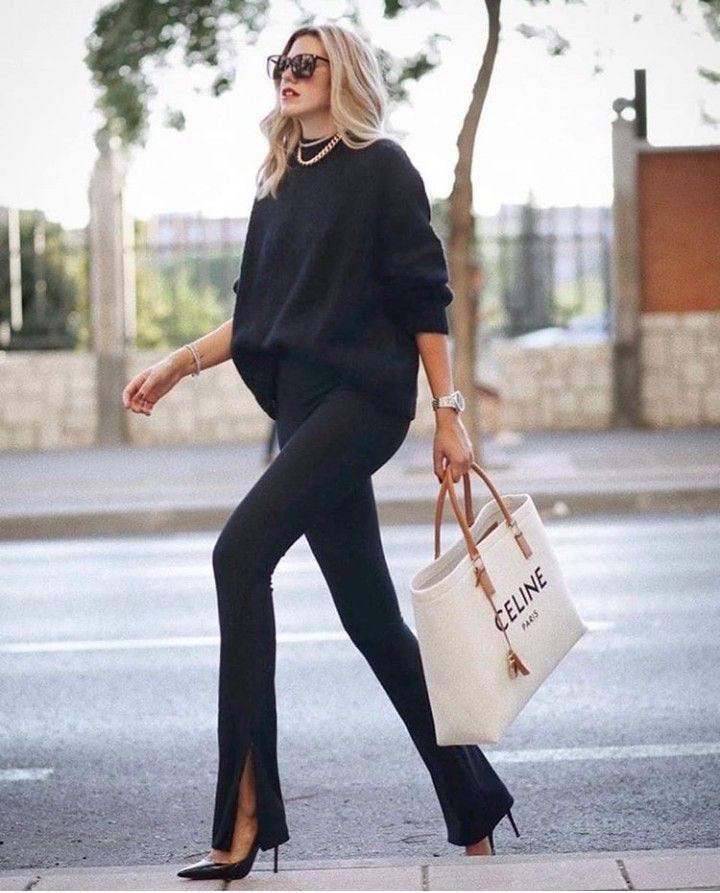
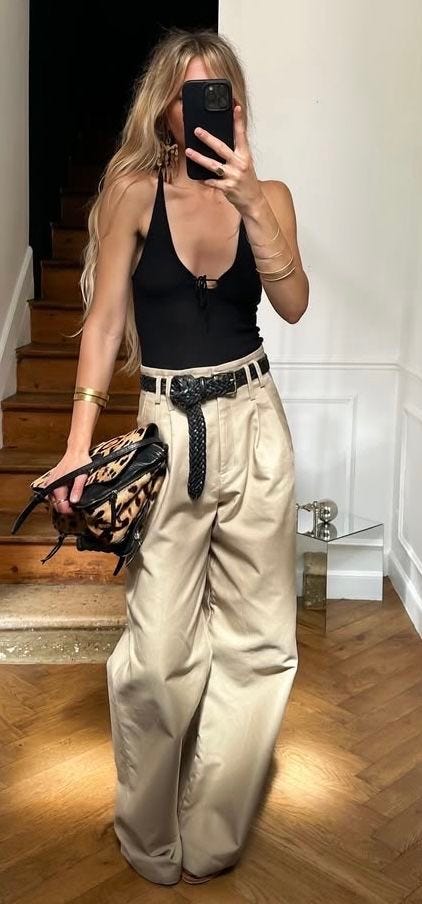
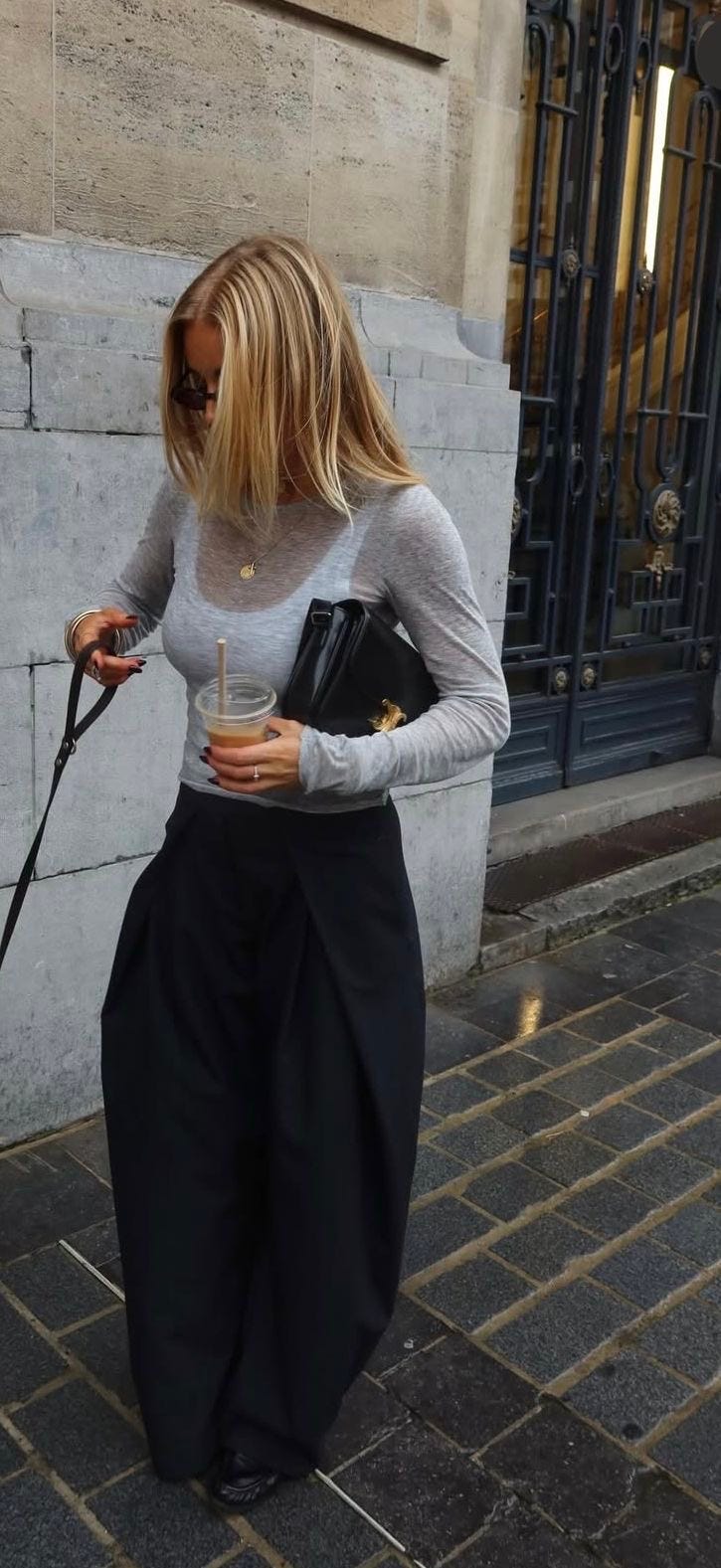
The second balance is proportion.
If the top is fitted, allow the bottom to move.
If the bottom is slim, let the top breathe.
When everything is tight the outfit feels tense.
When everything is oversized the body disappears and the outfit starts wearing you.
Somewhere in the middle is where the magic lives.
You see this constantly in good street style photography.
A structured jacket with relaxed trousers.
A slim knit with a fuller skirt.
It creates rhythm.
And rhythm, strangely enough, is what our brain reads as effortless.
3. Skin, choose your moment
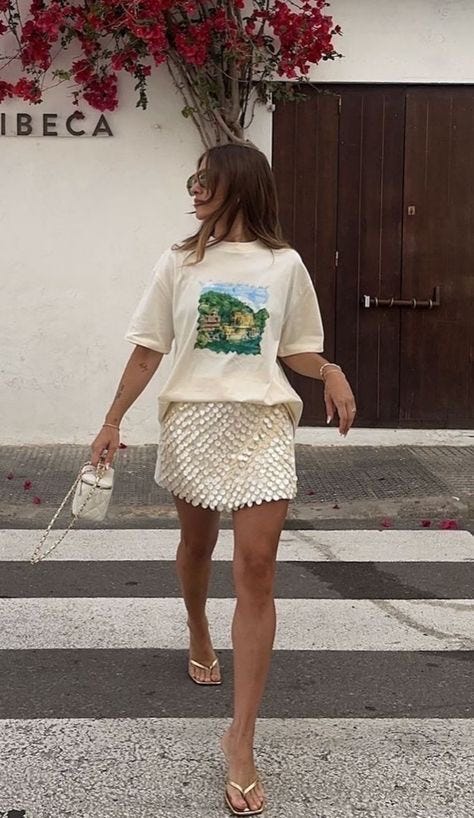
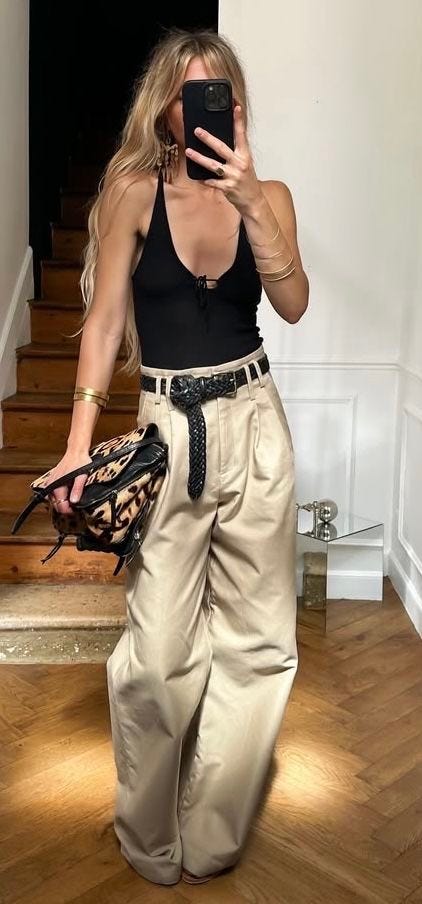
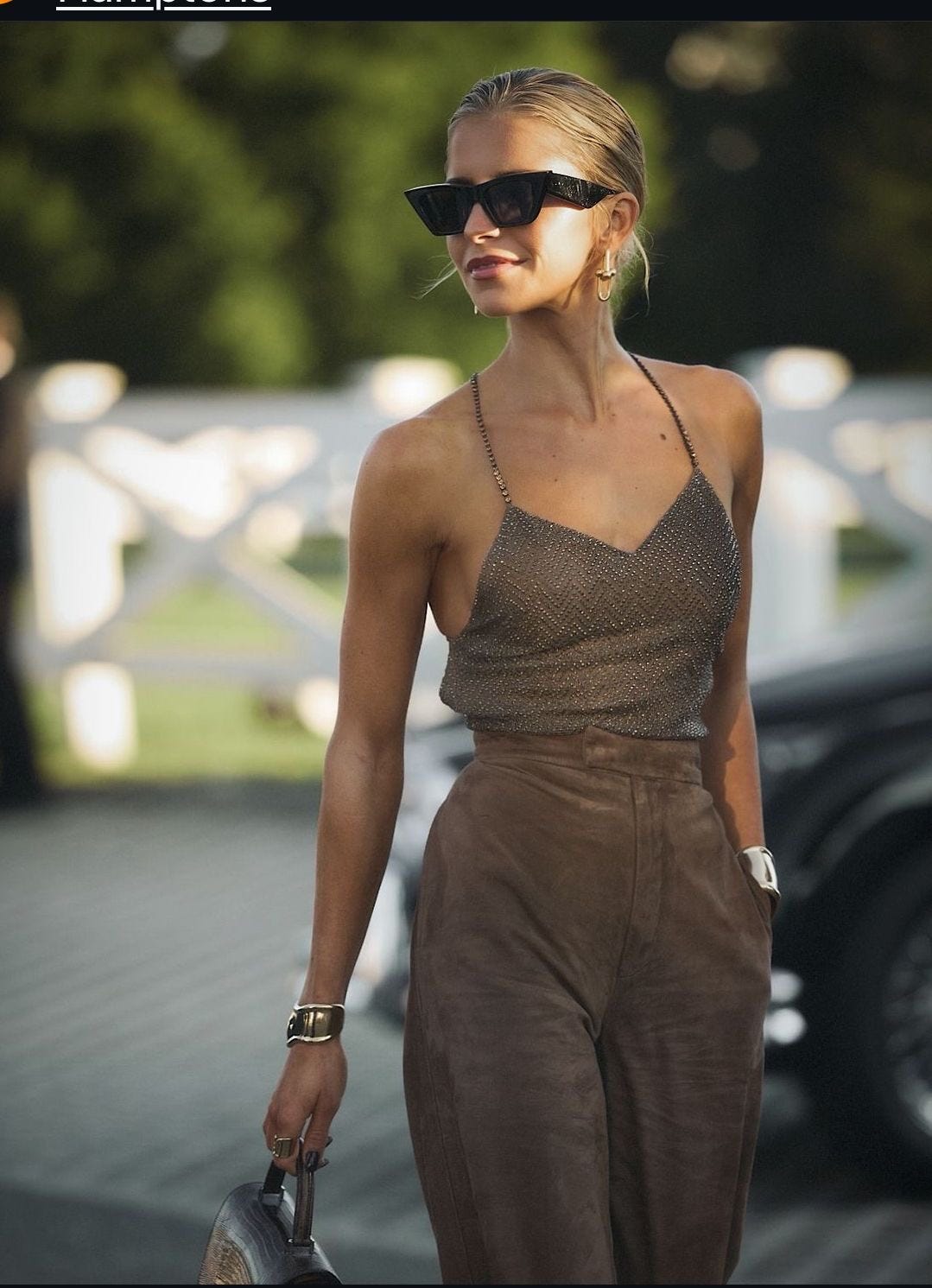
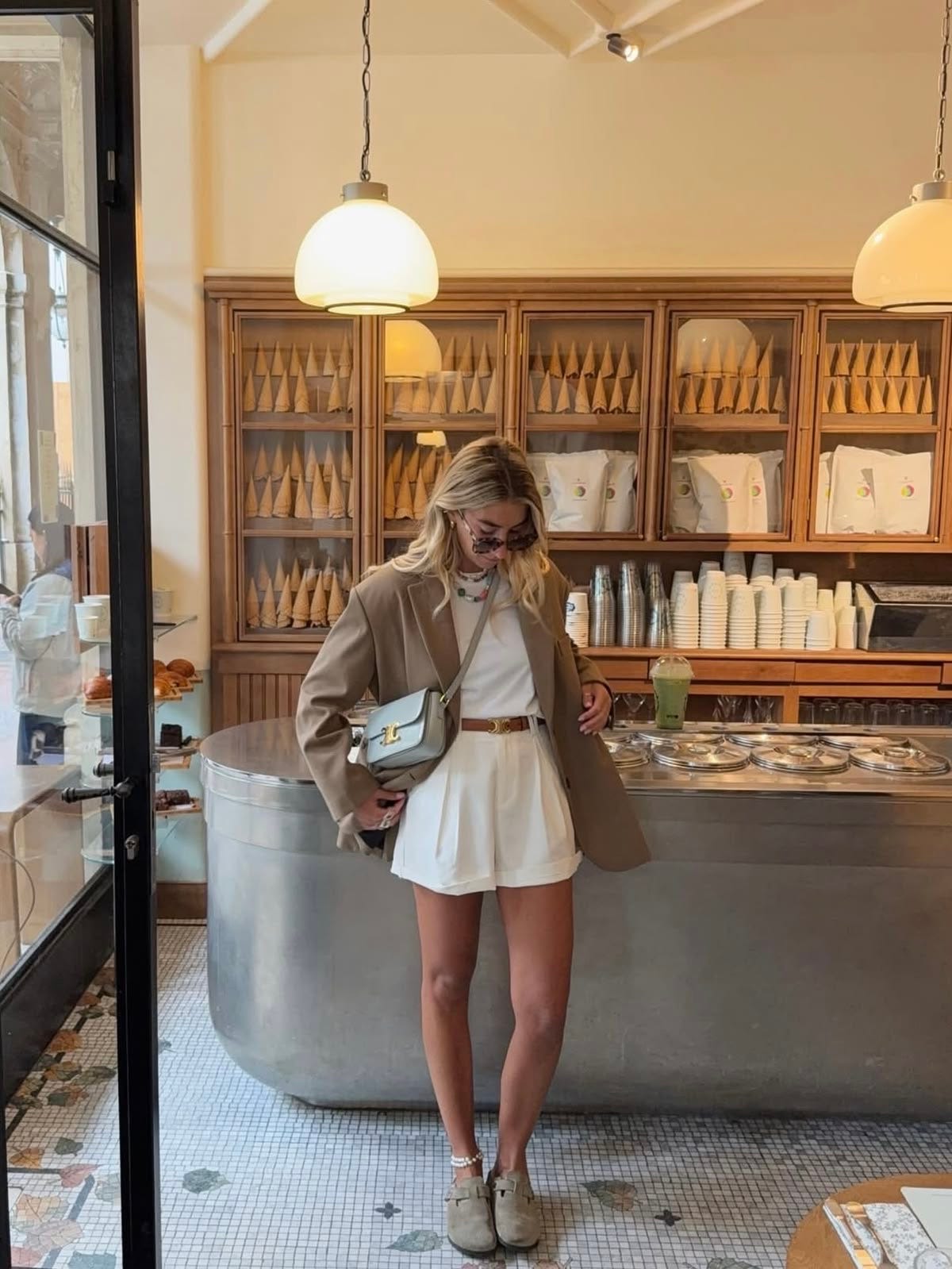
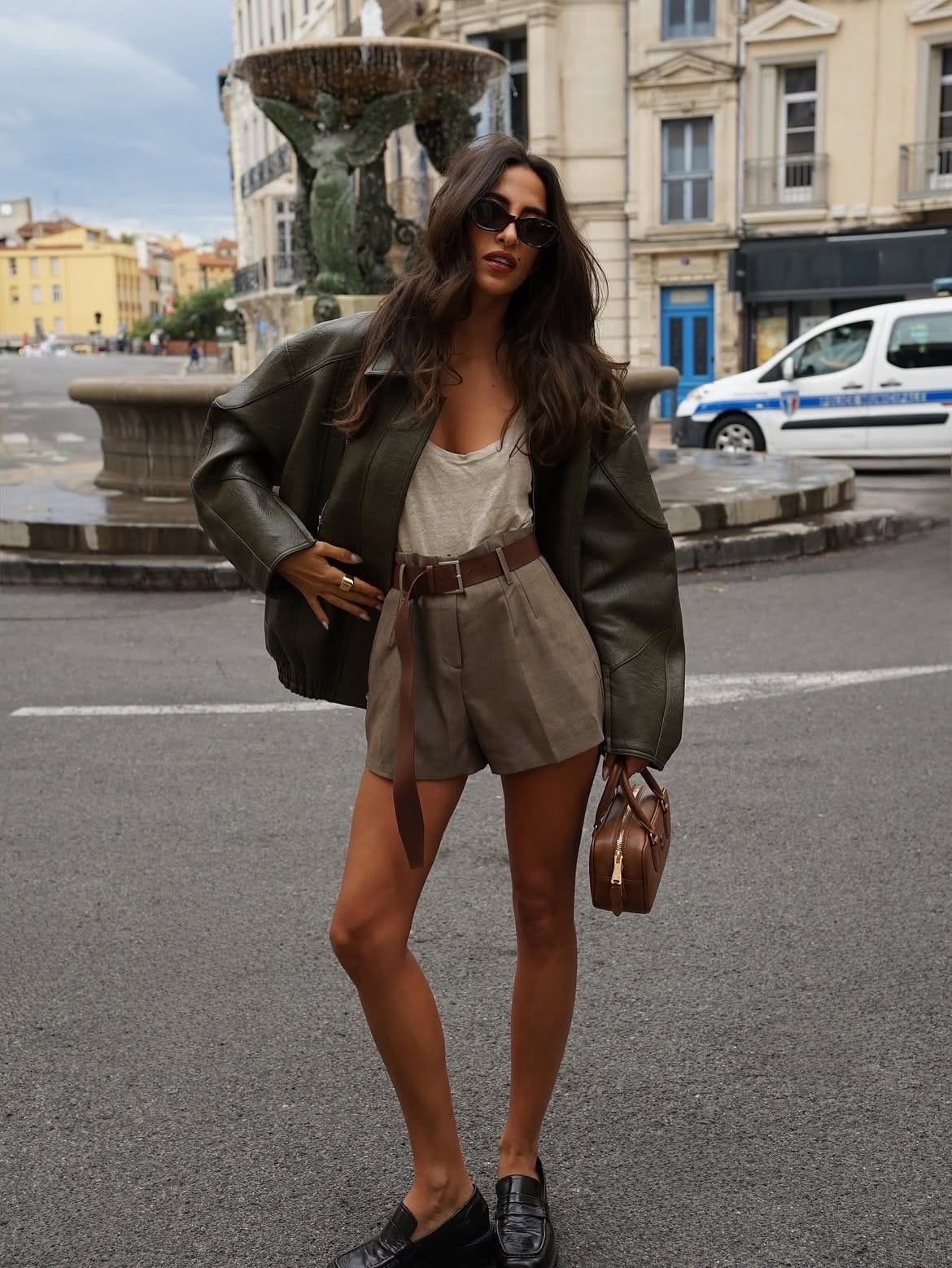
Spring is usually when skin begins to appear again.
A lower neckline.
Bare legs.
Lighter fabrics.
And this is where restraint becomes very powerful.
If the neckline is open, keep the bottom more classic.
If you show leg, let the top stay a little quieter.
Otherwise the eye doesn’t know where to look.
And when the eye doesn’t know where to look, the outfit loses authority.
One focal point is elegant.
Three is chaos.
4. The Three Colour Rule (which saves a lot of unnecessary stress)
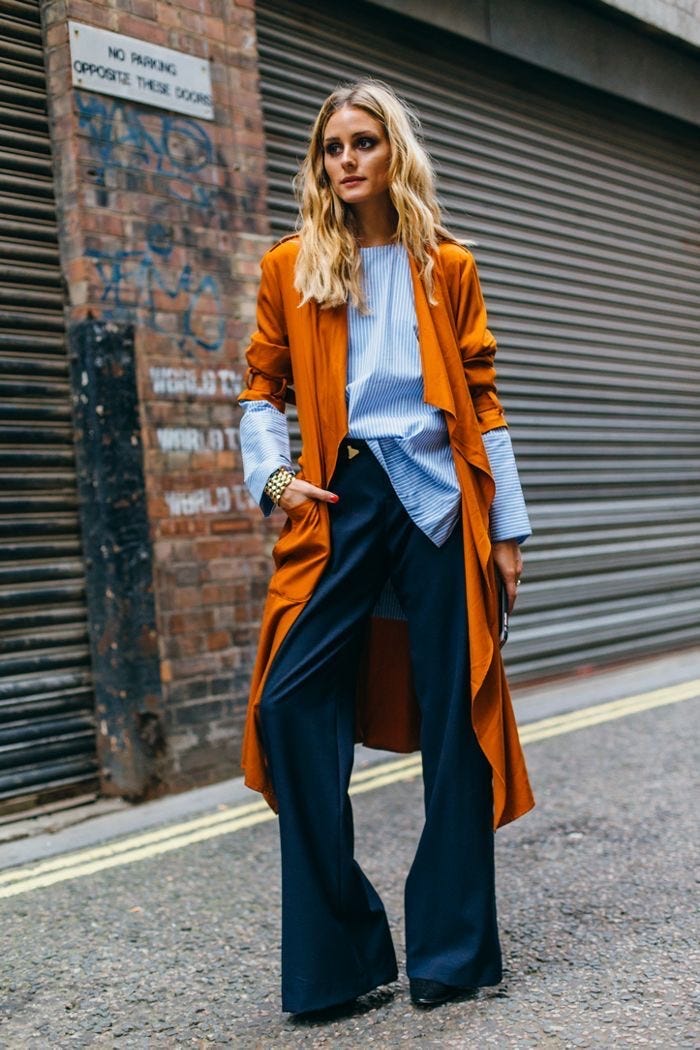
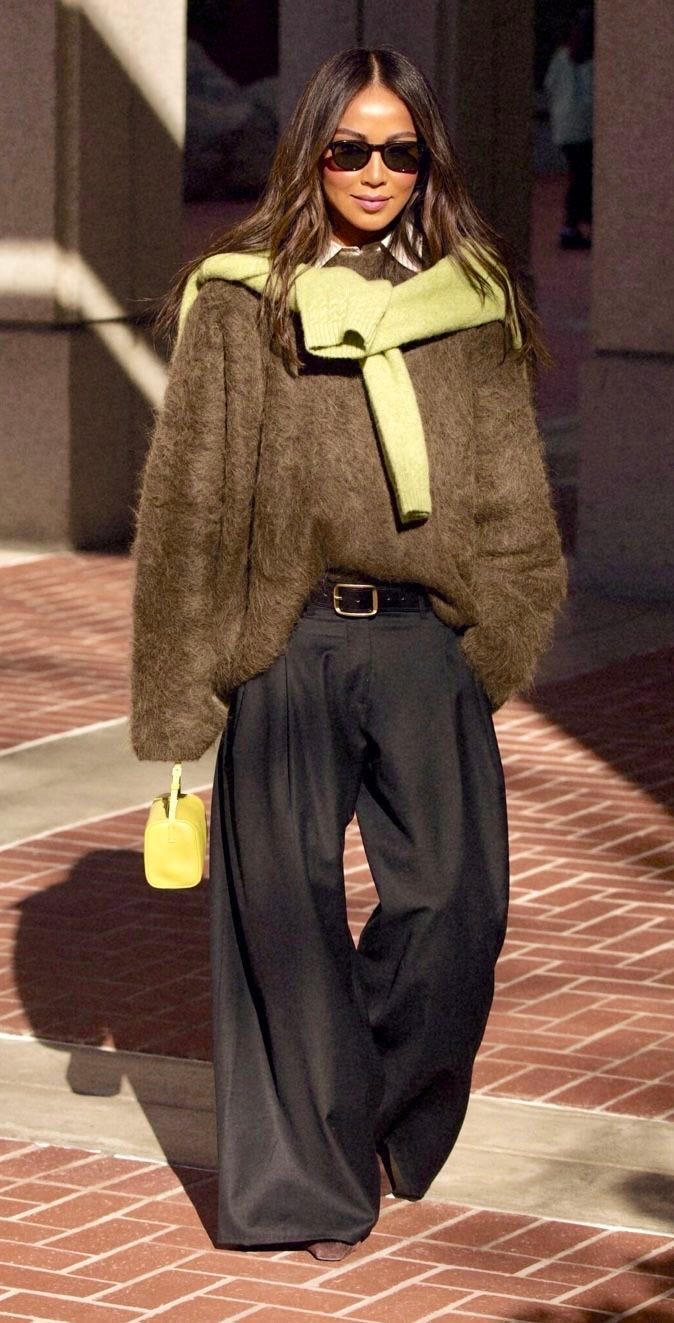
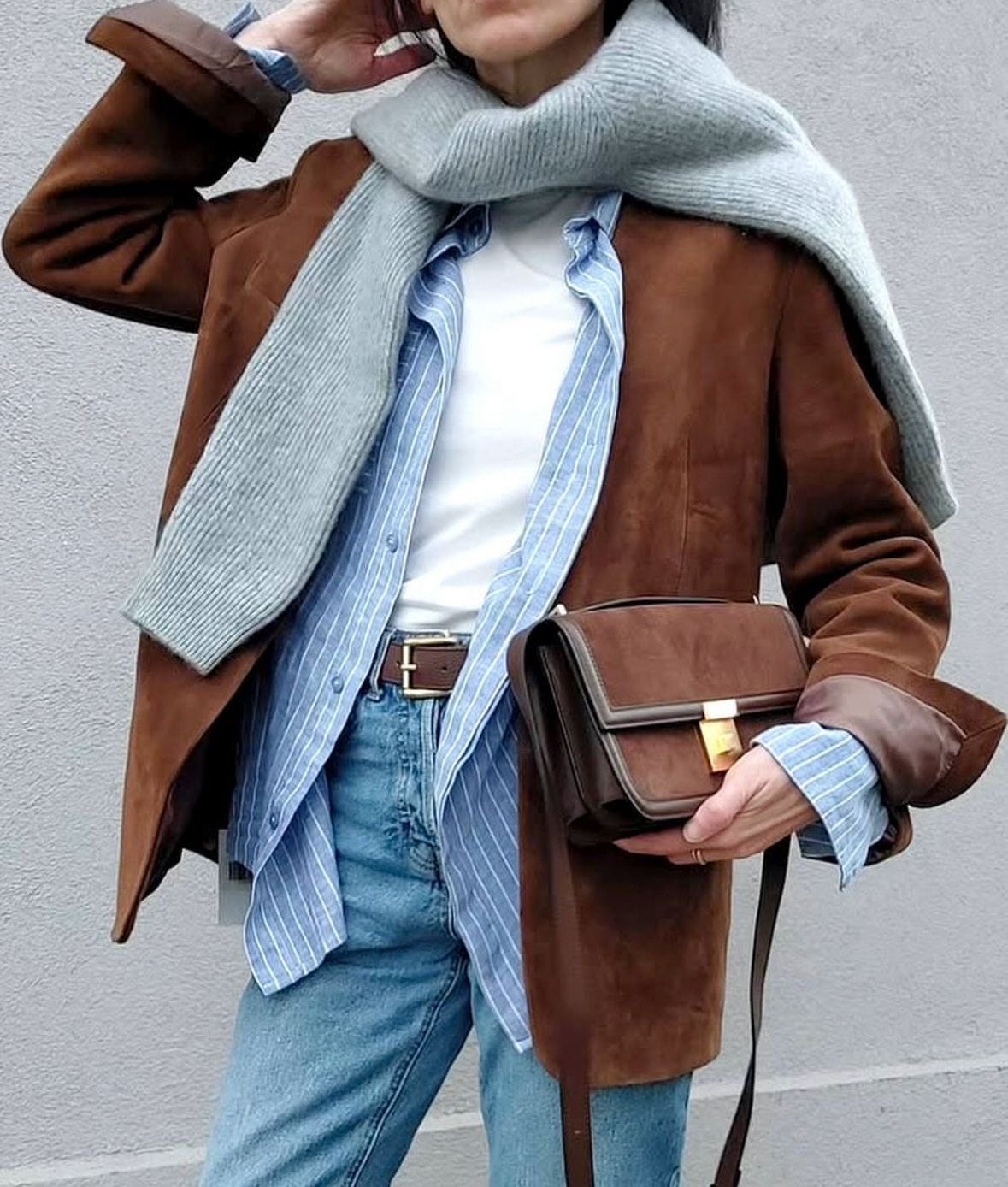
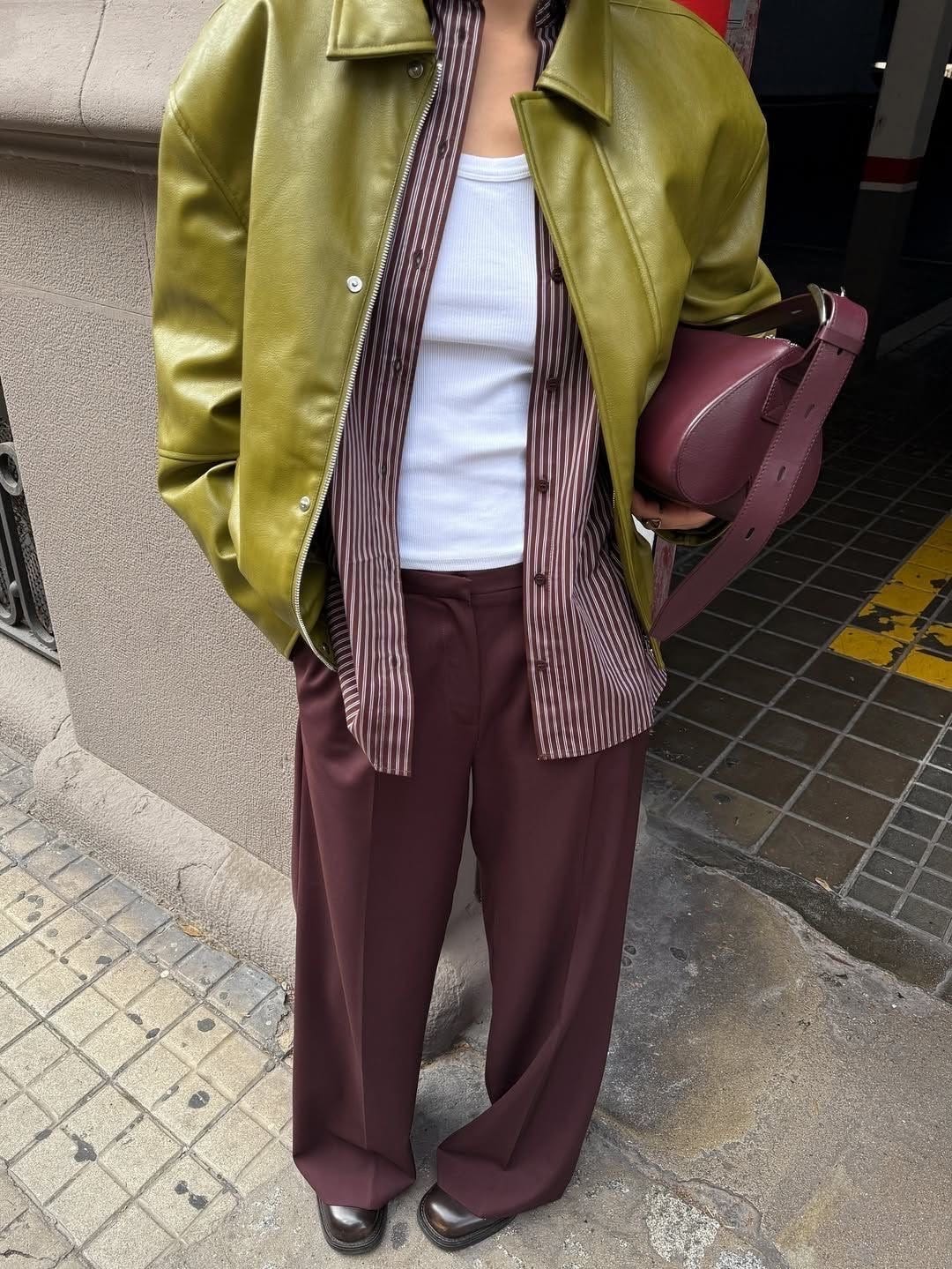
If you ever feel stuck getting dressed, limit the palette.
Three colours usually work perfectly:
• one light
• one medium
• one dark
This automatically creates continuity.
Shoes can echo one of them.
The bag can repeat another.
And suddenly the outfit feels cohesive without looking overly coordinated.
It’s also why monochromatic outfits always feel slightly elevated.
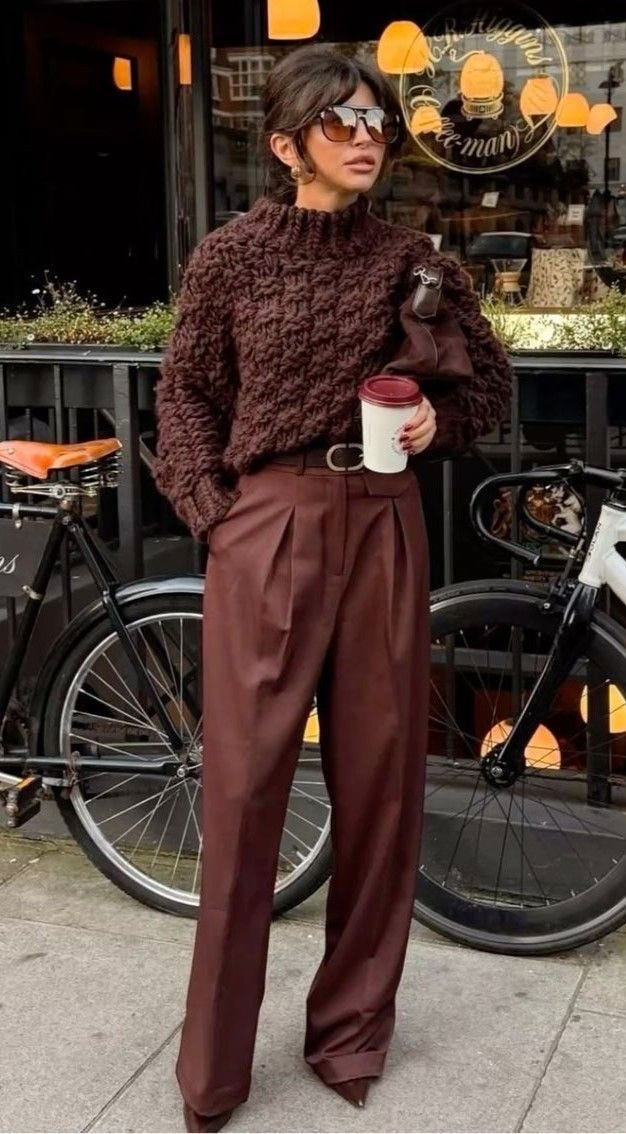
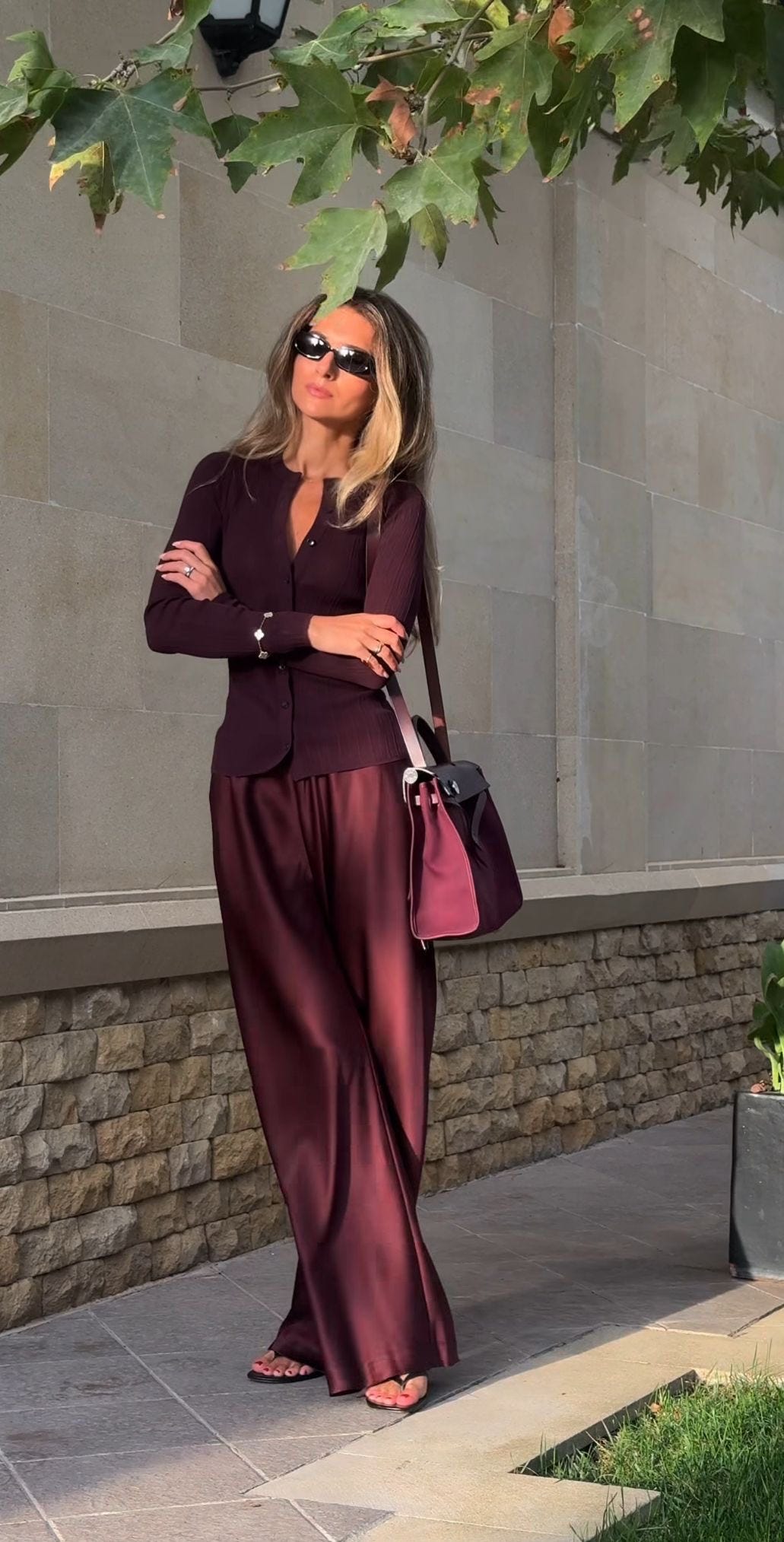
Not because everything is perfectly matched, actually, that’s where people get it wrong.
Monochromatic doesn’t mean same exact shade, head to toe.
It means one colour family, explored properly.
Different shades, depths, and tones of the same colour.
You can wear cream with ivory.
Chocolate with camel.
Soft grey with charcoal.
They don’t have to match perfectly, they just have to belong to the same story.
I once had a client whose wardrobe was almost entirely purple. I’m not exaggerating, maybe 70% of it. Every shade you can imagine. Lavender, plum, deep aubergine, softer lilacs.
And she wasn’t wearing most of it.
Because she thought if the shades didn’t match exactly, they couldn’t go together.
So everything stayed separated, waiting for the “right” combination that never came.
When in reality, mixing those shades was exactly what would have made the outfits interesting.
Because that’s where monochromatic dressing becomes powerful.
Not in perfection.
In variation.
And this is where texture comes in.
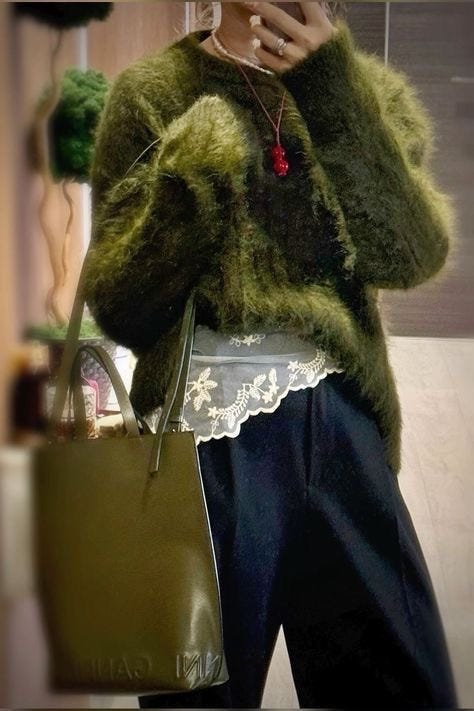
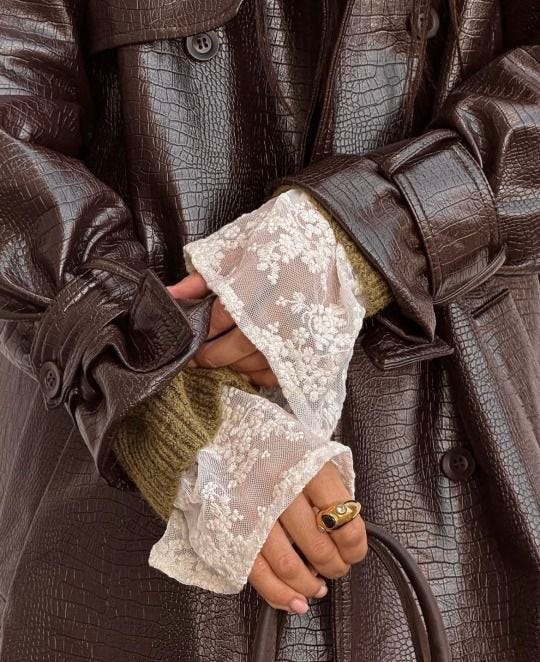
Because if you’re wearing similar colours from head to toe, texture is what creates depth.
Leather with knit.
Silk with denim.
Wool with something soft and fluid.
Even something as simple as a structured blazer with a lightweight top underneath can completely change how the outfit feels.
Without texture, a monochromatic outfit can fall flat.
With texture, it becomes layered, considered, and. quietly, very expensive looking.
And there’s another reason stylists love this approach.
It elongates the body.
When the eye doesn’t get interrupted by harsh colour breaks, it travels smoothly from top to bottom. Which makes you look taller, more streamlined, more put together without trying too hard.
It’s one of the simplest ways to look elegant.
And one of the most misunderstood.
5. The luxury trick nobody talks about, white space
Designers, architects, magazines, galleries, they all use the same principle.
White space.
In clothing it works the same way.
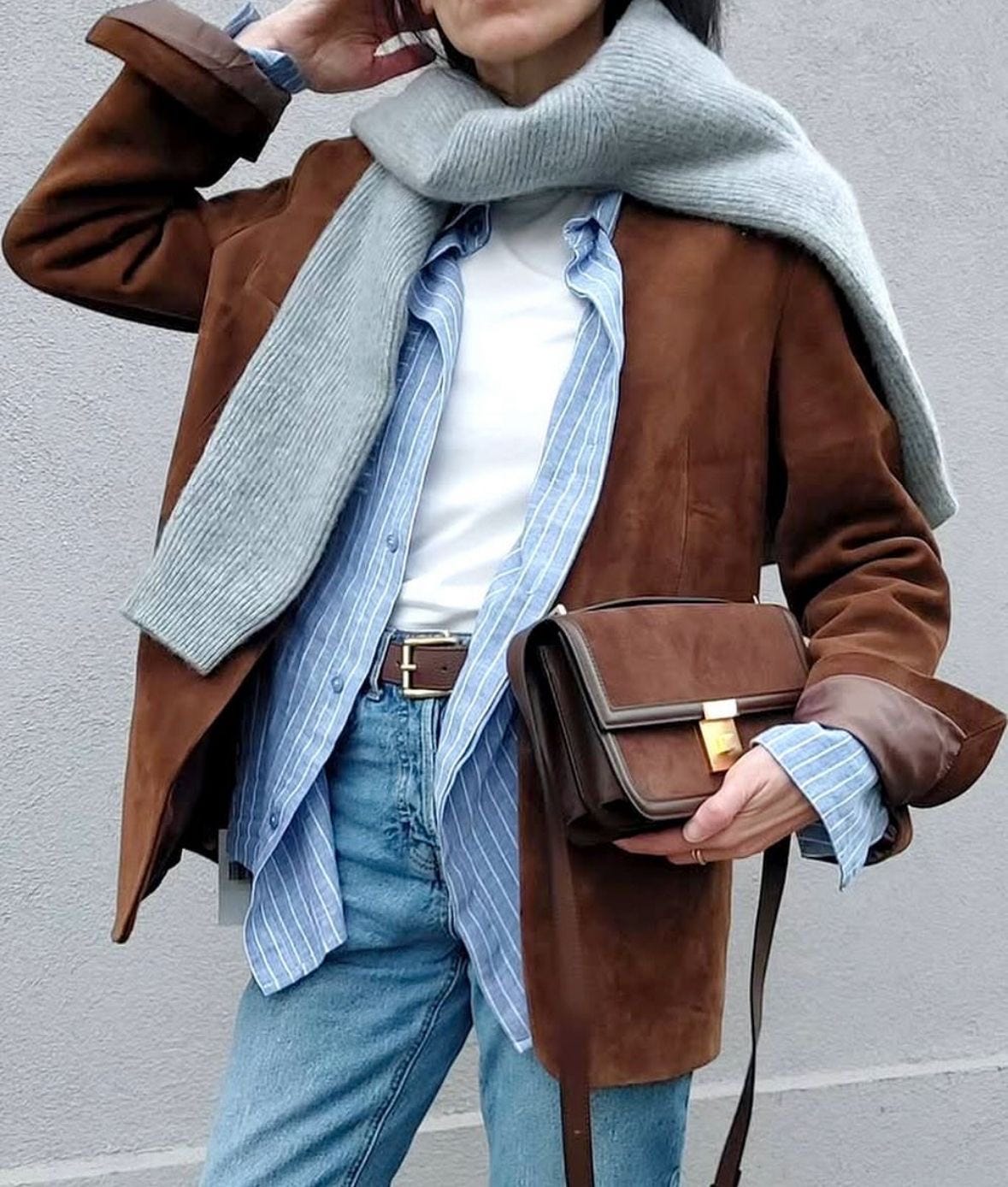
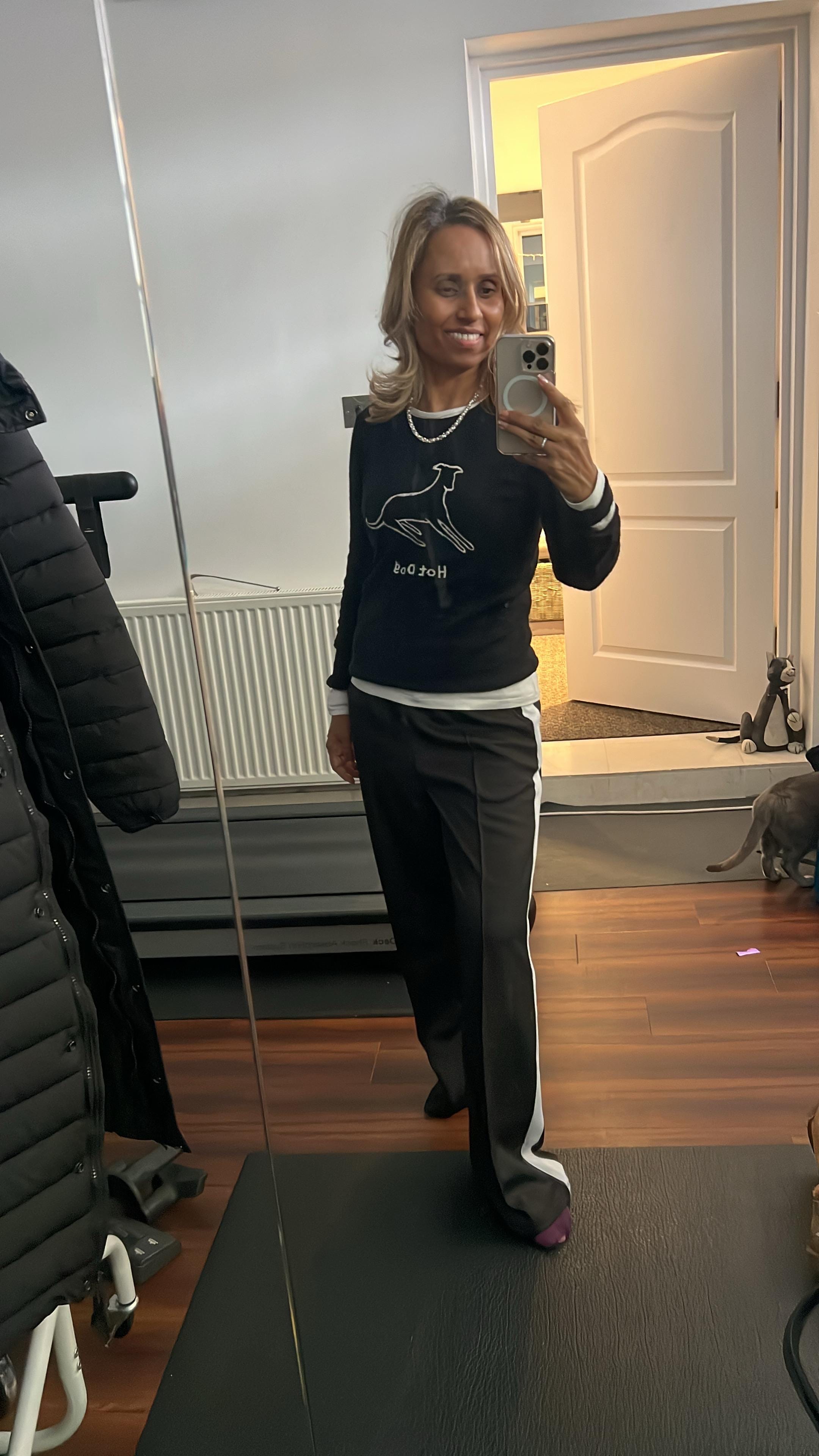
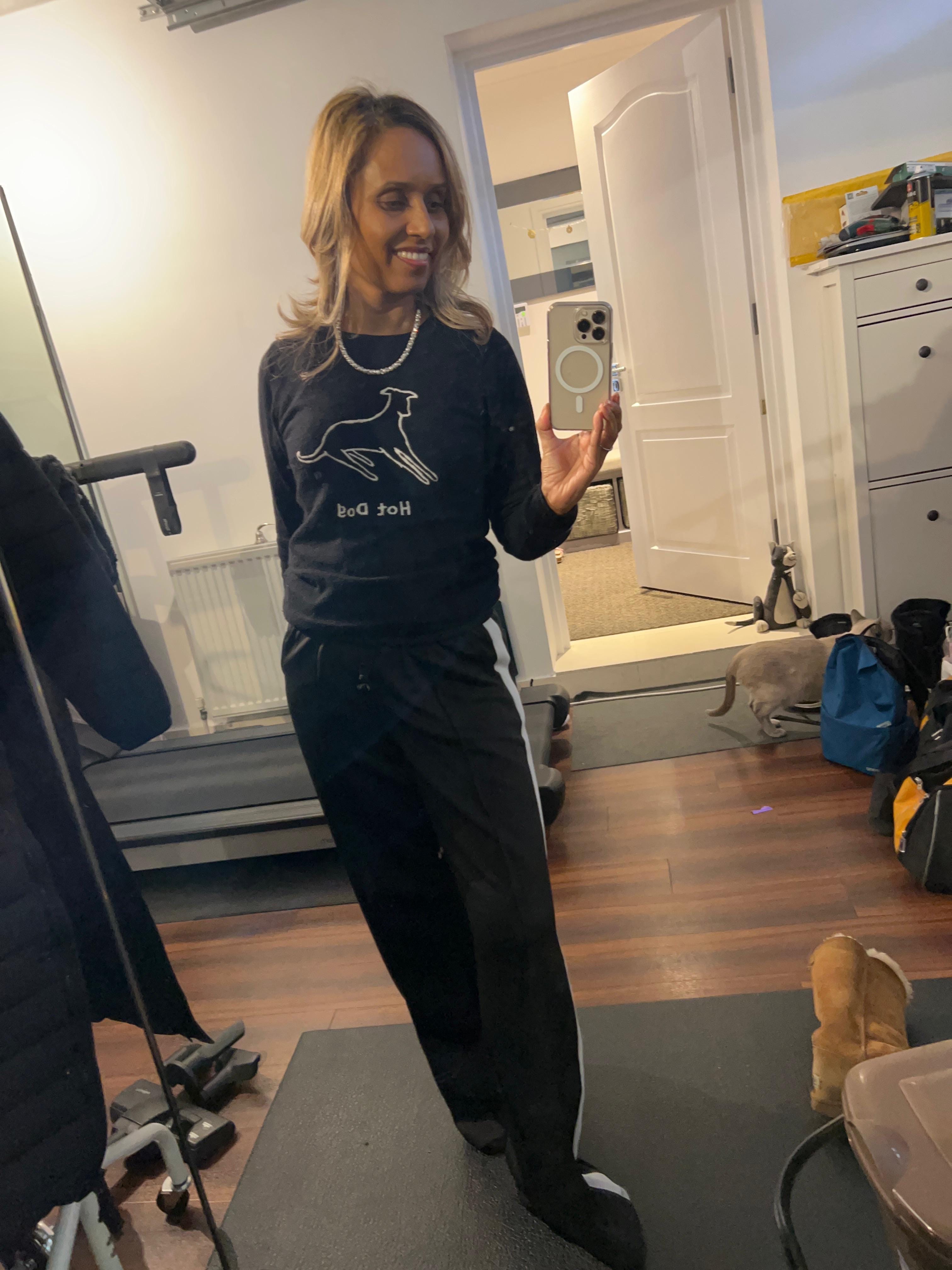
Add a white element to an otherwise dark outfit and suddenly everything breathes.
Think of an all-black outfit with a crisp white shirt underneath.
Or a dark blazer with a white tee.
The white creates a visual pause.
Luxury stores do this constantly in their displays.
Magazines do it in editorials.
Because when the eye has space to rest, everything looks more expensive.
(Here I’ll show you a photo from my WhatsApp styling community where we roast our outfits daily. It sounds savage but it’s actually very fun. If you want to join, comment and I’ll send the link. Fashion therapy with witnesses.)
And this is why spring dressing is secretly the easiest season to master, because the season itself already teaches you the principle.
Light against dark.
Structure against softness.
Flowers against branches.
Balance.
Which, coincidentally, is also the secret behind almost every elegant wardrobe. ;)
A small invitation
If you’re currently staring at your wardrobe thinking none of this makes sense anymore, you’re not alone.
It usually just means the structure needs adjusting.
If you’re in that moment and want a second pair of eyes, comment or send me a message.
I’m always happy to talk wardrobes.
After all, this is quite literally my favourite subject.
Carolina x
I love your tips.
The white spaces has stuck in my mind. I’m always going to use that from now on.
Next on the list, I’m going follow the rest of the tips here.
Like you, I’m going through my wardrobe and wearing everything from it as I go through the year. It’s a great way to figure out what I’m going to keep and what I’m going to give away.