


I heard something recently that I haven’t been able to stop thinking about.
There are things you can’t learn through a course, a book or by watching somebody explain them on the internet. Sometimes you need to spend time with someone who already understands them, watch how they think, ask questions and experience something for yourself before it finally clicks.
And naturally, my brain went straight to wardrobes.
Because apparently, at this point, absolutely everything in my life eventually becomes a conversation about clothes.
But I genuinely think there’s something important here.
We live in a world where you can learn almost anything without leaving your sofa. There are tutorials on how to dress for your body shape, videos explaining colour theory, hundreds of styling hacks and approximately seventeen thousand women on Instagram demonstrating how to make a white shirt look interesting.
And don’t get me wrong, I love that we have access to all this information.
But then why do so many women still stand in front of wardrobes full of clothes thinking they have absolutely nothing to wear?
Why do they have Pinterest boards full of beautiful outfits but struggle to put together something they genuinely love from their own clothes?
And why, after watching another video about the ten essential pieces every woman needs, do they somehow end up with eleven new purchases and exactly the same problem?
I have a theory.
We’ve become very good at collecting inspiration, but we haven’t necessarily learnt how to interpret it for ourselves.
Because understanding why an outfit works on somebody else is one thing. Understanding why it works, or doesn’t work, on YOU is something completely different.
You might love the way a woman wears an oversized blazer with wide-leg trousers, but perhaps the exact proportions don’t give you the effect you enjoy on your own body.
You might admire somebody’s minimalist wardrobe while secretly being the kind of woman who feels wonderful in colour, texture and ridiculous jewellery.
Or perhaps you keep buying dresses because you love the idea of being somebody who wears dresses, despite the fact that your actual life involves school runs, meetings, travelling around London and occasionally attempting to eat dinner before nine.
And none of that means you don’t have style.
It means you’re trying to apply somebody else’s answers to a question that is very personal.
I find this particularly interesting because I see it happening in real time when I work with clients.
Women show me beautiful pieces they’ve bought over the years, explain what attracted them to each one, and then tell me they have no idea how to wear half of them.
Sometimes they’ll show me a photograph of somebody wearing something similar and say, “I wanted it to look like THIS.”
And I understand why.
But then we start looking at the actual clothes, their body proportions, their lifestyle, the fabrics, the colours they love and how they want to feel when they get dressed.
And the whole conversation changes.
I’m not teaching them to copy an outfit.
I’m helping them understand how to create one.
Which brings me to a client I worked with recently.
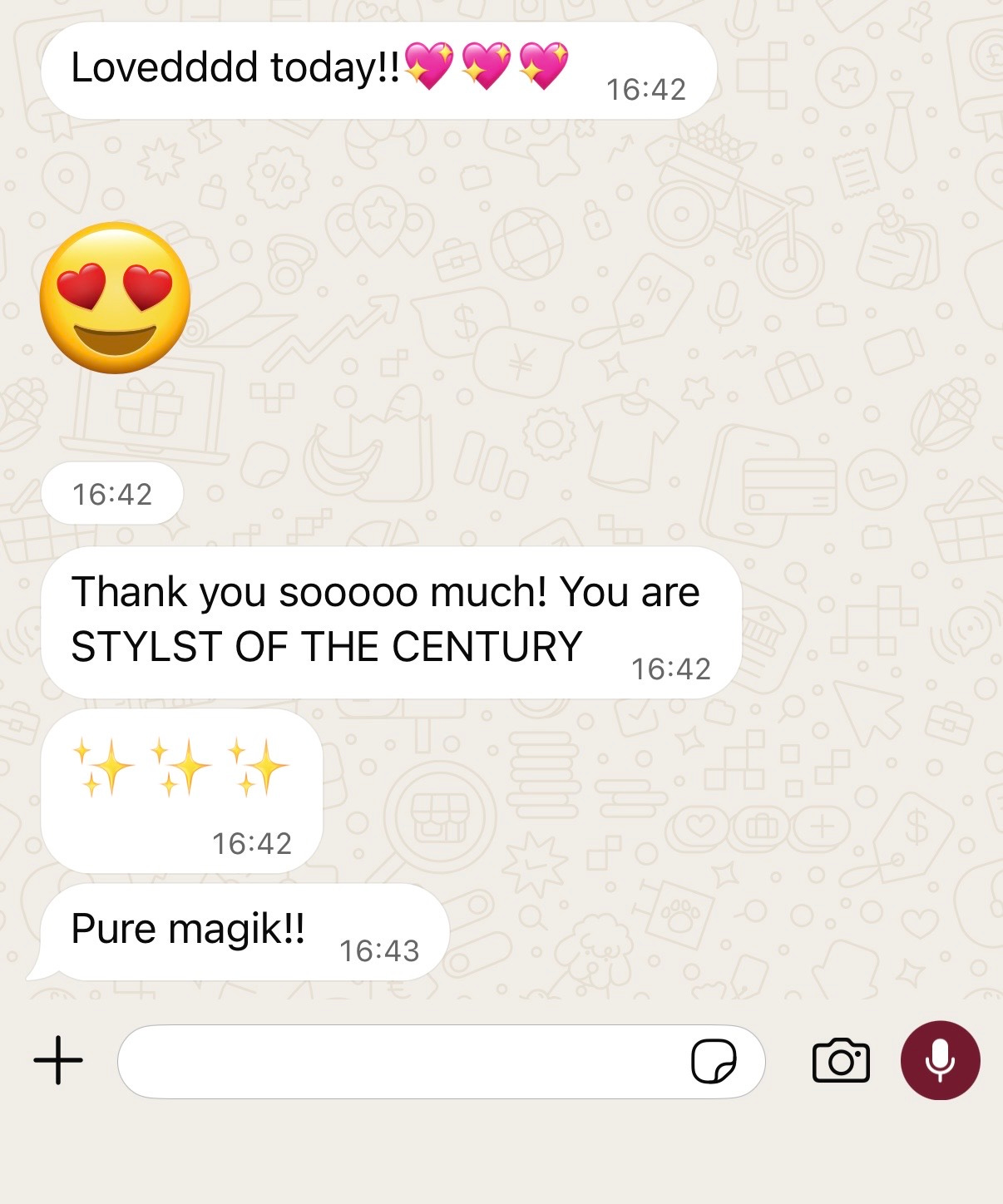
She was going through a particularly stressful moment because she was trying to move home in London.
If you’ve ever tried to find somewhere to live in this city, you’ll know that the experience can make even the most emotionally balanced person question their entire existence.
She’d found an apartment she absolutely loved, made an offer, and it had been rejected.
Understandably, she was disappointed.
And in the middle of all of this, we had our Wardrobe Edit.
Three hours together, going through the clothes she already owned, understanding her lifestyle, working with her proportions, exploring new combinations and putting together outfits she could actually wear.
By the end of the session, we’d created 52 outfits.
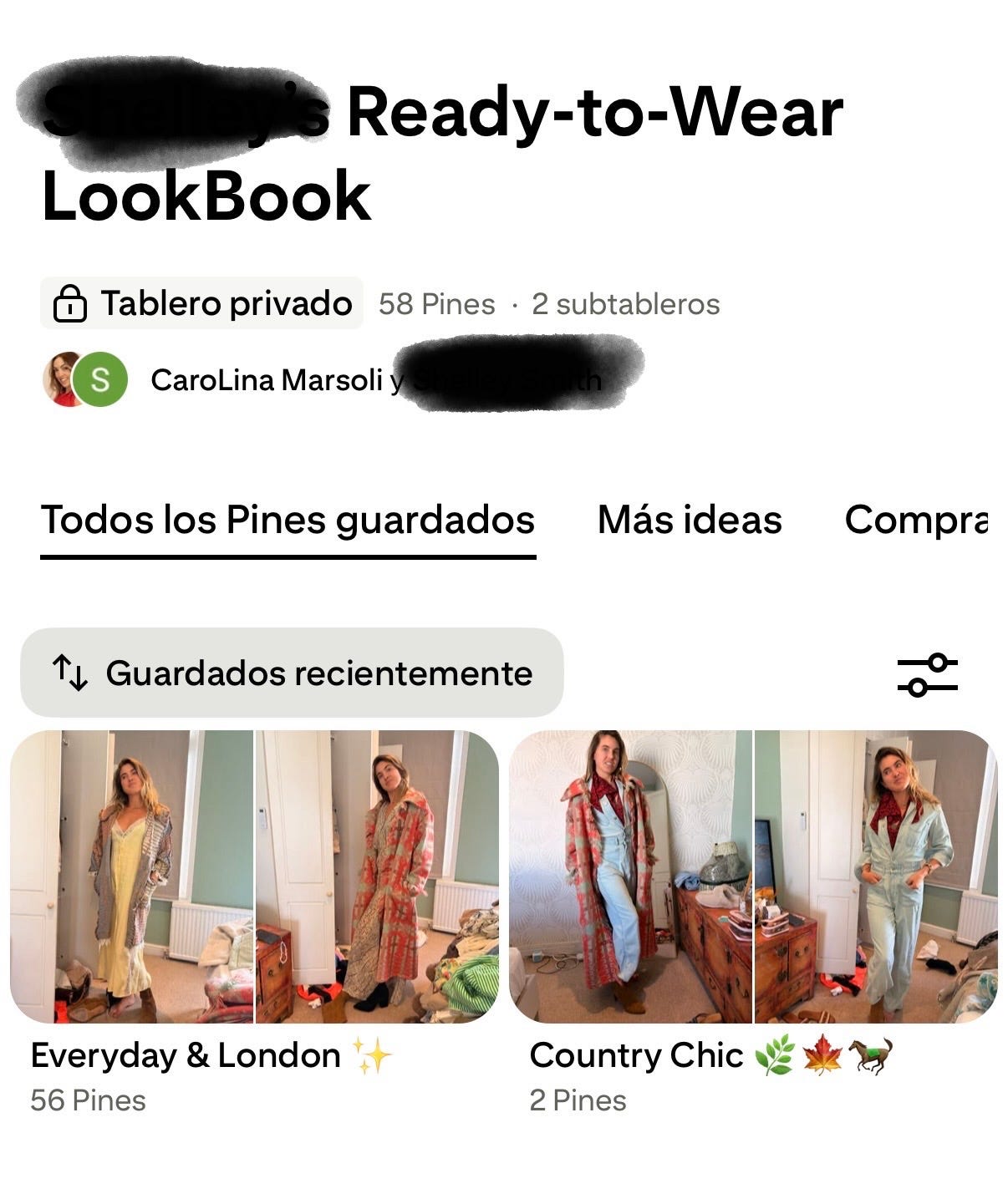
From her own wardrobe.
I think this is where some people misunderstand what a Wardrobe Edit actually is.
They imagine somebody arriving at their house, telling them what to throw away, organising their hangers by colour and perhaps suggesting a few things to buy afterwards.
Which, to be fair, sounds quite satisfying.
I do love an organised wardrobe.
But the organisation isn’t the transformation.
The transformation happens when a woman starts seeing possibilities in clothes she’s been looking at for years without really knowing what to do with them.
When she discovers that the jacket she thought only worked with one pair of trousers can actually be worn in six different ways.
When a dress she had practically forgotten about suddenly becomes one of her favourite pieces again.
Or when she realises that she doesn’t need to buy another bloody thing to have a wardrobe that feels exciting.
That’s the part I love watching.
And I think it’s difficult to reproduce that experience by simply sending somebody a list of styling rules.
Because I’m working with her actual clothes, on her actual body, for her actual life. And she’s watching what happens as we make decisions together.
She can ask me why I’ve chosen a particular jacket, why I changed the shoes, what happens when we adjust the proportions or why one combination feels more balanced than another.
And instead of receiving an abstract piece of advice, she can look in the mirror and see what I’m talking about.
That’s the difference between knowing a technique exists and understanding how to use it.
A quick interruption: If someone sent you this newsletter and you’re not subscribed yet, you can join for free. I write every week about personal style, the strange things we do with our wardrobes and how to get much more out of the clothes we already own.
Anyway, back to the apartment, because the situation gets interesting.
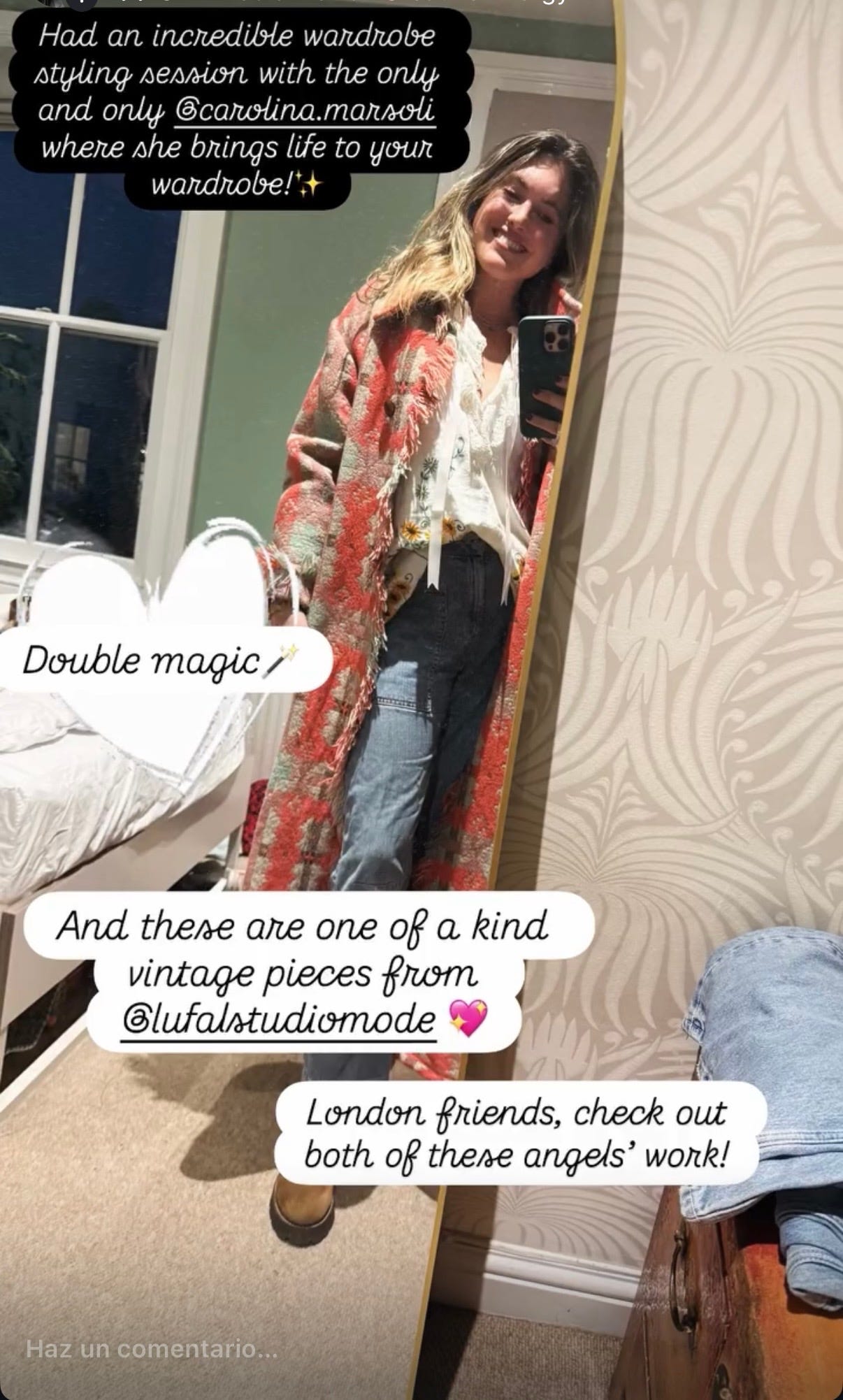
During our session, we’d spoken about what was happening, and I shared something I often say to my clients.
I believe that the way we present ourselves can help us step into the experiences we want to create.
Not because a beautiful outfit has magical powers.
Although, honestly, some of my favourite shoes have come dangerously close.
But because when you feel comfortable, confident and excited about yourself, you often approach situations differently.
You stop spending so much attention worrying about how you look or whether you have the right things.
You have more space to enjoy what’s actually happening.
And sometimes that shift feels enormous.
Well.
After I left her house, I received a message.
She was on her way to meet the landlord, wearing one of the outfits we’d just put together, when the estate agent called.
The people who had been ahead of her for the apartment had changed their minds.
The apartment was hers.
WHAT?!
And as if that wasn’t enough, when she spoke to the landlord about the extra month’s rent she’d expected to pay, he told her that he actually needed her to move in earlier.
So she wouldn’t have to pay that additional month after all.
I mean.
COME ON.
I couldn’t have written a better ending if I’d tried.
Now, before somebody tells me that personal styling doesn’t influence the London property market, I KNOW.
I’m not suggesting that putting together 52 outfits caused another tenant to withdraw their offer.
I would be making considerably more money if I could control London real estate through the strategic placement of a blazer.
But I found the timing extraordinary, and what stayed with me was the whole experience around it.
She’d started the day carrying the stress of something she couldn’t control, and by the time I left, she had 52 combinations she hadn’t known were available to her, a new way of looking at her clothes and something lovely to feel excited about.
Then came the news about the apartment.
And I was delighted for her.
Because I think there’s something powerful about learning to recognise what you already have instead of constantly looking at what’s missing.
I talk quite a lot about abundance in my personal life, and I know that word can make people uncomfortable.
Sometimes it sounds as though we’re supposed to sit on the sofa, think positive thoughts and wait for a cheque to arrive through the letterbox.
Which would be wonderful, obviously, but unfortunately the electricity company still expects me to pay my bills.
For me, abundance has much more to do with how we experience what is already available to us, while continuing to take action towards the things we want.
And I think wardrobes are a brilliant place to practise that.
Because when you open your wardrobe feeling that nothing works, your attention immediately goes towards the gaps.
You need another pair of trousers. A different jacket. Some shoes that go with everything. Perhaps a whole new aesthetic, because apparently the woman you were six months ago has become completely unacceptable.
So you go shopping.
You find something lovely, feel that little rush of excitement, bring it home and enjoy the possibilities of your new purchase.
And then, eventually, you find yourself back in front of the wardrobe asking the same question.
Now imagine opening that wardrobe and knowing you’ve already got thirty, forty or even fifty outfits ready to wear.
Not imaginary Pinterest outfits.
Your actual clothes.
Photographed, organised and adapted to the different parts of your life.
The satisfaction of discovering a new combination doesn’t have to end when the styling session finishes, because you get to enjoy those discoveries every time you wear them.
And that’s what I want women to experience.
Not a temporary feeling of having bought something exciting.
A completely different relationship with the things they already own.
This is why I developed my Wardrobe Architect Method.
Before we start buying anything, I want a blueprint.
I need to understand how you actually spend your days, because there’s very little point building a wardrobe around a lifestyle you only live twice a year.
We identify your personal style, the colours, fabrics, shapes and proportions you enjoy, and the combinations that make you feel fantastic.
Then we begin working with the clothes already hanging in front of us.
We build Outfit Formulas for the different parts of your life and photograph the combinations into a Ready-to-Wear LookBook.
The whole idea is that getting dressed becomes quick and intuitive, rather than something you have to figure out from scratch every morning.
And only after we’ve done that do we look at what might genuinely be missing.
Because sometimes there are gaps.
Perhaps a particular pair of shoes would make several outfits more versatile, or you need a better-fitting pair of trousers for work.
Wonderful. Now we can shop with a purpose.
But we know exactly what we’re looking for and WHY.
We’re no longer walking into a shop hoping that something beautiful will solve a problem we haven’t taken the time to understand.
And I think that’s a completely different way of approaching personal style.
There’s also something else I want to say about learning from people who already know how to do something.
When I work with a client, I don’t want her simply to admire the outfits I’ve created and then feel incapable of putting together anything new without me.
I want her to start recognising the patterns herself.
To understand why that particular neckline works beautifully with her proportions, why she keeps reaching for certain fabrics or how changing one accessory can give an outfit a completely different personality.
Because those discoveries are hers to keep.
And they don’t disappear when I leave her house.
I suppose that’s what the original thought about learning through proximity made me realise.
We can consume an extraordinary amount of information and still struggle to apply it to our own lives.
Sometimes what we need isn’t another tutorial.
It’s an opportunity to experience the thing ourselves, with somebody who can help us see what we’ve been overlooking.
And in the case of our wardrobes, I think that’s particularly valuable because personal style is so deeply connected to who we are.
Our bodies, our preferences, the lives we’re living and how we want to express ourselves.
There isn’t one universal answer.
And perhaps that’s why I find this work so fascinating.
I can walk into a room full of clothes that somebody has been looking at for years, and three hours later she can see an entirely different wardrobe.
The clothes haven’t changed.
But her understanding of what she can do with them has.
(Curious what might be hiding in your own wardrobe? Let’s find out together. You can book a complimentary Wardrobe Discovery Call and we’ll explore what’s possible with the clothes you already own.)
And that’s something she gets to carry into every morning afterwards.
As for my client and her apartment, I’m just thrilled that she’s now got a beautiful new home to move into.
And fifty-two outfits to wear while she’s enjoying it.
Although I sincerely hope she doesn’t try to wear all of them on moving day.
Love,
Carolina x
P.S. Have you ever spent ages trying to learn something through videos, books or tutorials, only to understand it almost immediately when somebody showed you in person?
I’d love to hear what finally made it click for you.
And if you’re new here, you can subscribe for free and receive my Wardrobe Pattern Assessment. It’s a starting point for recognising the patterns behind the clothes you already enjoy wearing and understanding what your wardrobe might actually need before you buy anything else.